2023 to 2025 · Creative lead, art direction, visual design and live operation · for Guinness, with Jordan Ralph Design, The Tenth Man and Verve
Lovely Days was Guinness's stage at All Together Now in Waterford. In 2023 it replaced a 2,500-capacity tent with an open-air stage under an overhead shelter. The brief asked for a stage that reads from three camera positions, the drone overhead, the crowd and the wide shot from front of house, that works as a real festival stage for bands, and that breaks the usual split between audience and performer. Kev led the creative and brought Jordan Ralph on board to design the physical stage with him. The same structure ran for three years, refined each year.
Documented process
1. The brief and the references
The briefing split the job into four parts: structure (Jordan Ralph), lighting (Darragh McAuliffe), a TouchDesigner visual system (Pauric Freeman), and the art direction tying them together (Kev). Kev and Jordan then built a concept deck, dated 8 June 2023, which opens with a cloud of about eighty references: timber pavilions, open-air amphitheatres, lit rings, black buildings. The cloud showed what the stage should not look like as much as what it should.
 Concept deck, Kev Freeney and Jordan Ralph. The small images are other people's work, used as references.
2. Two materials: burnt timber and gold repair
Two ideas fixed the look early. Shou sugi ban, the Japanese method of charring timber, gave a black, textured cladding that suits an outdoor stage and a pint of stout. Kintsugi, the repair of a broken bowl with gold, gave the line work: thin gold seams across the black. The finished stage was clad in charred timber with gold dibond.
3. First forms
The first models were simple: a black box with a lit ring screen, wrapped in vertical timber slats and backed by the tree line, then a version with a curved, rising slat front. The later renders drop the slats for a flat black face with the ring in front of it.


Concept deck renders, Kev Freeney and Jordan Ralph.
4. Kintsugi, monoliths and the halo
The chosen direction: a charred black face crossed by gold seams, a white ring, the halo, in front of the screen, and tall monoliths with cut tops either side. The monoliths came from a stone circle on a hillside, so the stage reads as a place as well as a platform.


Concept deck renders, Kev Freeney and Jordan Ralph.
5. Placing it on the hill
Jordan Ralph Design drew the site in 3D, in section and in plan on an A0 sheet dated 27 June 2023: the stage against the tree line, the canopy circle in front, the monoliths around it, and the fall of the ground. These are the drawings the fabricators and the production team worked from.


Drawings: Jordan Ralph Design.
6. The kit behind the face
The deck and roof are standard hire structure: a 12 by 10 metre stage and roof of scaffold and black cladding. The point of the design was to make that kit disappear behind the charred face and the monoliths.
 Structure drawing from the stage hire company.
7. Canopy, front of house and bar
In front of the stage a ten-metre circle of truss on legs carries a fabric canopy. The front-of-house desk and the bar were drawn to match, black volumes with gold trim and a white lid, so the whole field reads as one composition from the drone.


Concept deck renders, Kev Freeney and Jordan Ralph.
8. The arc over the performers
The key structural move: a ten-metre circular truss used for 225 degrees of its circle, hung over the stage so the arc reaches out over the audience, carrying LED and lights, and lifting on at least four points so its height can change. It sits in front of a six by six metre LED screen. The halo and the screen arc were modelled in Cinema 4D through early July 2023.


Rigging plot and 3D view: Darragh McAuliffe, Fade Time, with Kev Freeney as set designer.
9. Lighting the shapes
Darragh McAuliffe designed the lighting around the arc, the screen and the monoliths: modular linear fixtures to draw the curves, the audience washed from forty-five degrees, pixel bars on the screen truss, movers on the proscenium and side trusses, and strobe-washes around the halo. Each monolith carried its own strips and wash, and a line of fixtures ran along the tree line.


Lighting plots and monolith drawing: Darragh McAuliffe, Fade Time.
10. Seeing the light before building it
Visualisations of the red and blue washes were made before the rig went up, to agree colour and density and to check the light against the palette in the brief.


11. Specifying the kit, then cutting it
The first equipment specification, 29 June 2023, was a big rig: blades, pixel tubes, spot movers, washes and strobes, two consoles and a video controller. By 10 July the lighting was being redesigned, and the later plots drop the blades, the pixel tubes and the spot movers. The rig was brought back to what the structure and the kit list could carry.
 Lighting equipment specification, Fade Time.
12. The visual system
Pauric Freeman built a closed TouchDesigner system for the stage with three looks, daytime, evening and night, each generated in real time from the same family of liquid, stormy and golden imagery. It takes a live camera or artist feed through a capture card, can stylise it or pass it straight through, and routes the result to the screens. Kev designed and directed the looks, the control interface and the post-processing stack, and ran it live.
 Signal flow, redrawn for this page from the briefing document and the lighting specification. Not a production drawing.
13. The last month
The timeline ran from 6 July to the festival on 4 to 6 August: three generative looks sent for sign-off on 6 July, the lighting redesign signed off on 11 July, fabricator visits, the post-processing stack programmed on 13 July, the control interface built on 16 and 17 July, the server set up on 24 July, a stress test on 26 July, Kev on site from 31 July, and a full lighting test and walk-through on 2 and 3 August.
 Project tracker, Kev Freeney and Jordan Ralph.
14. The show
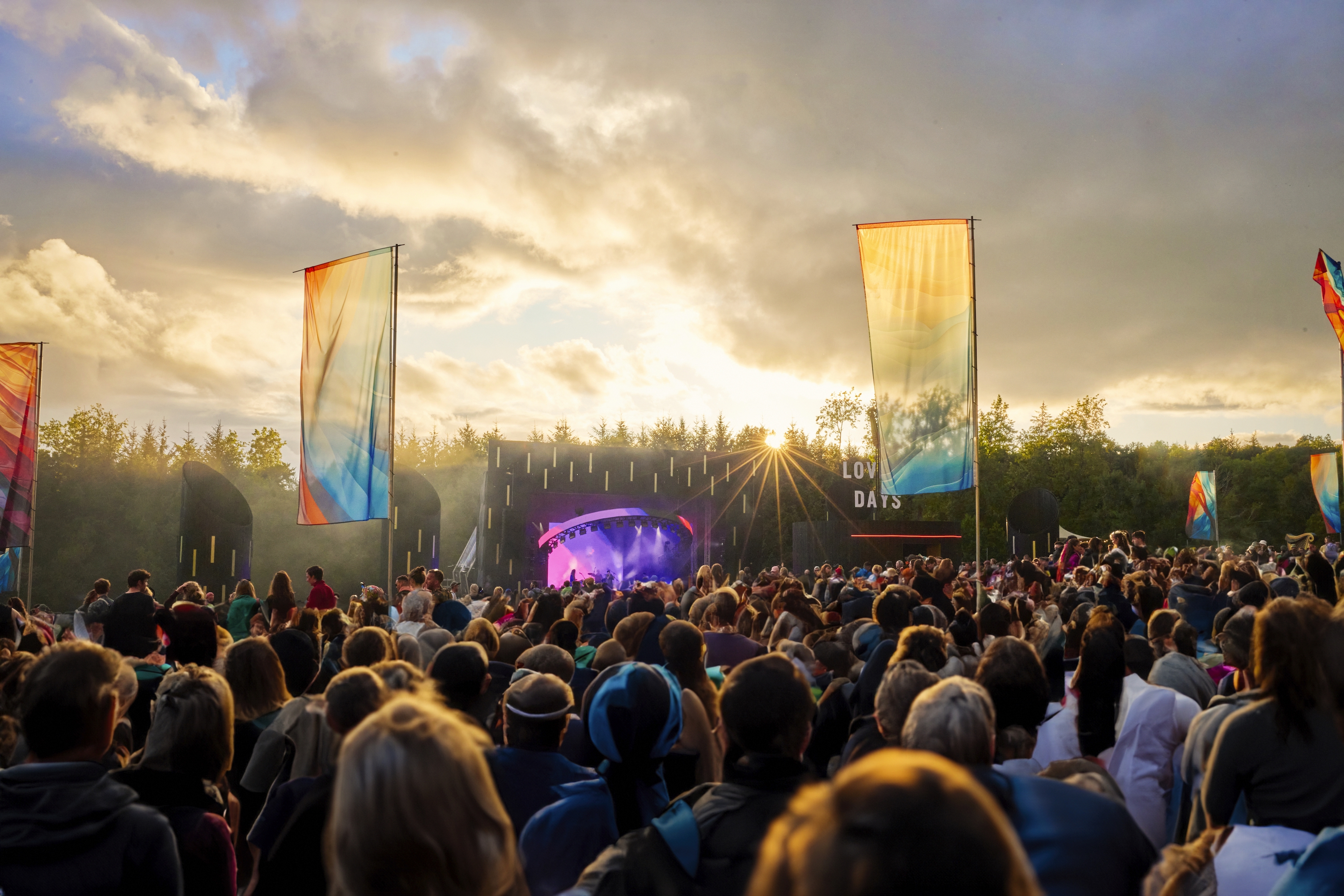
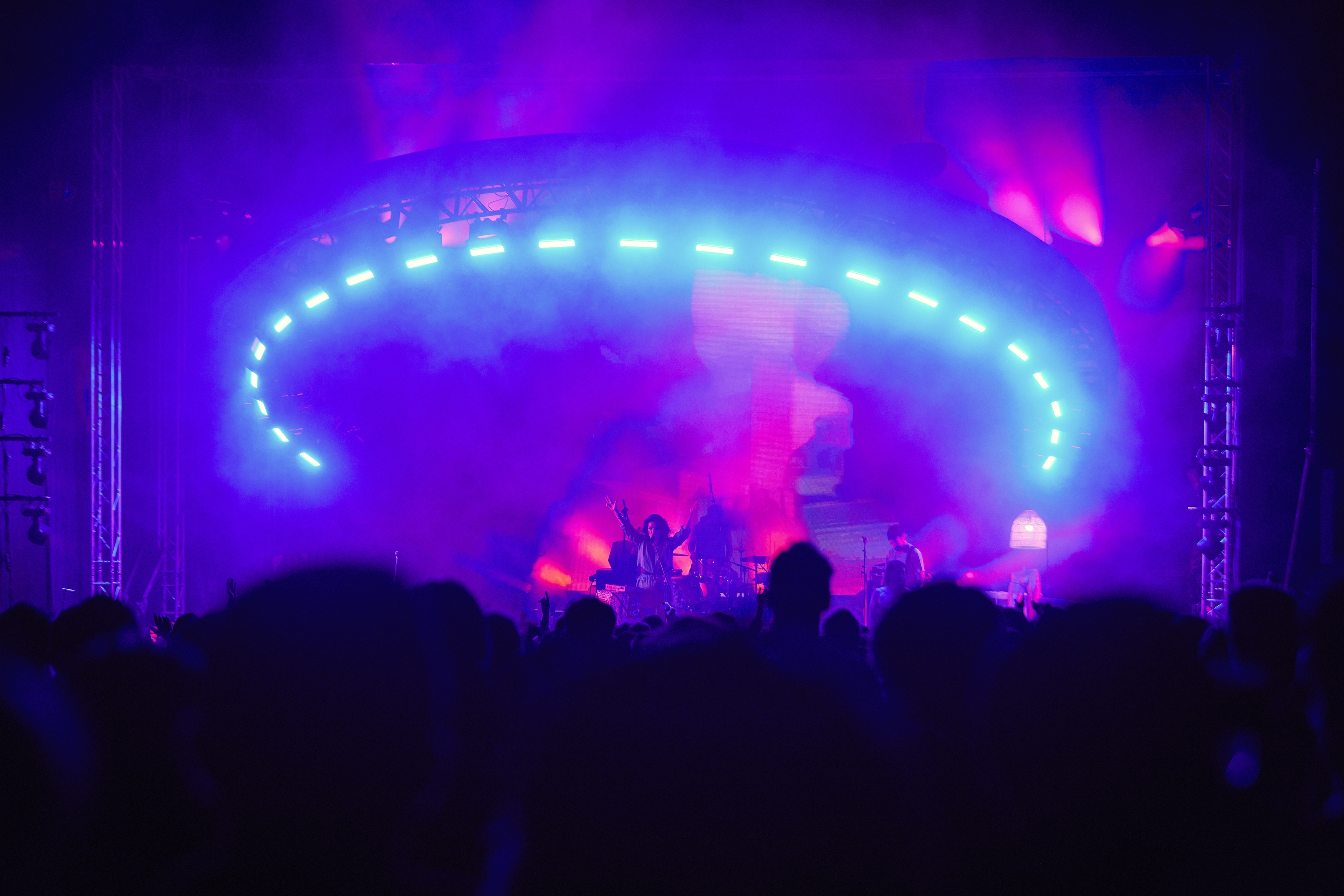
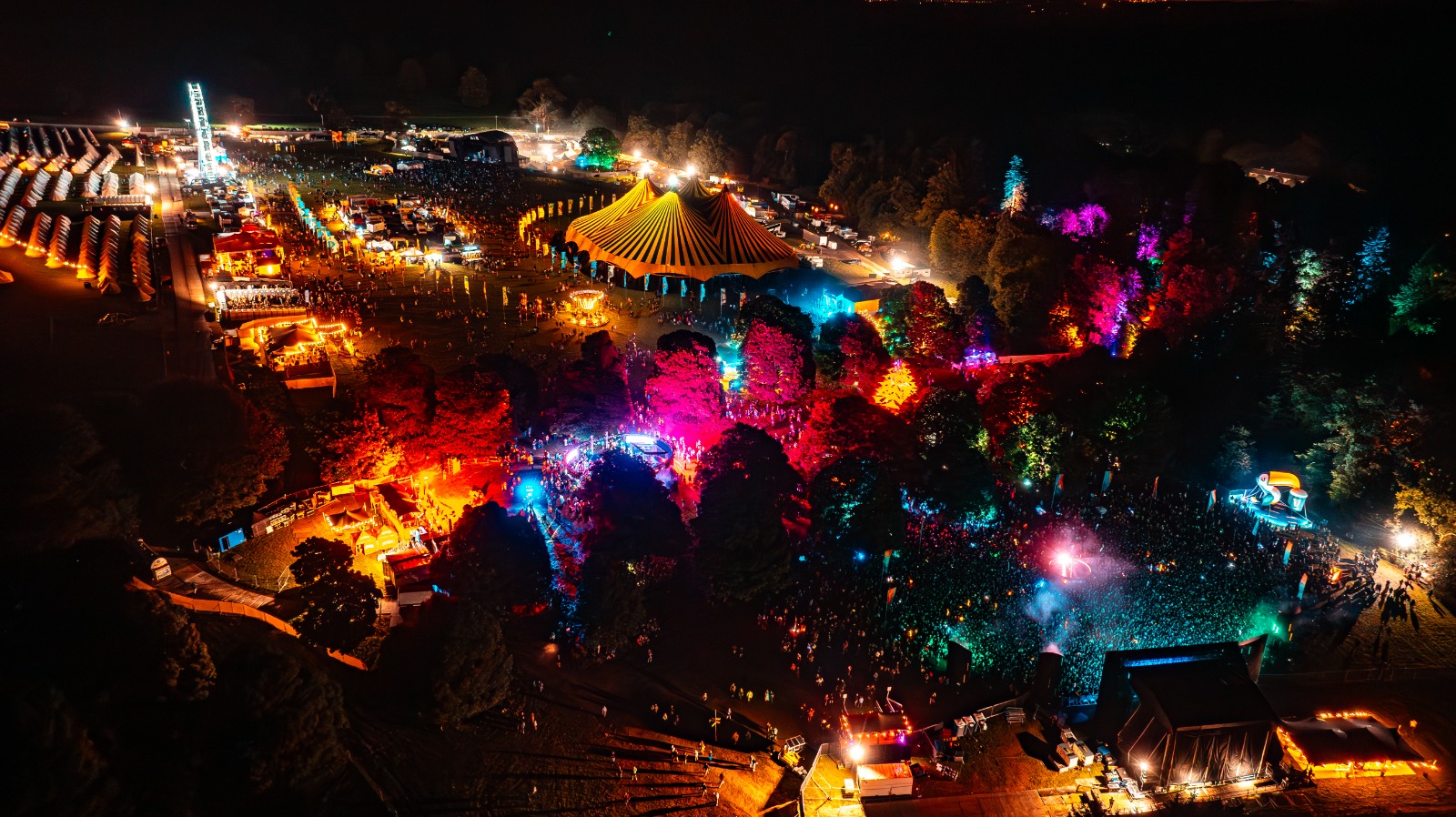
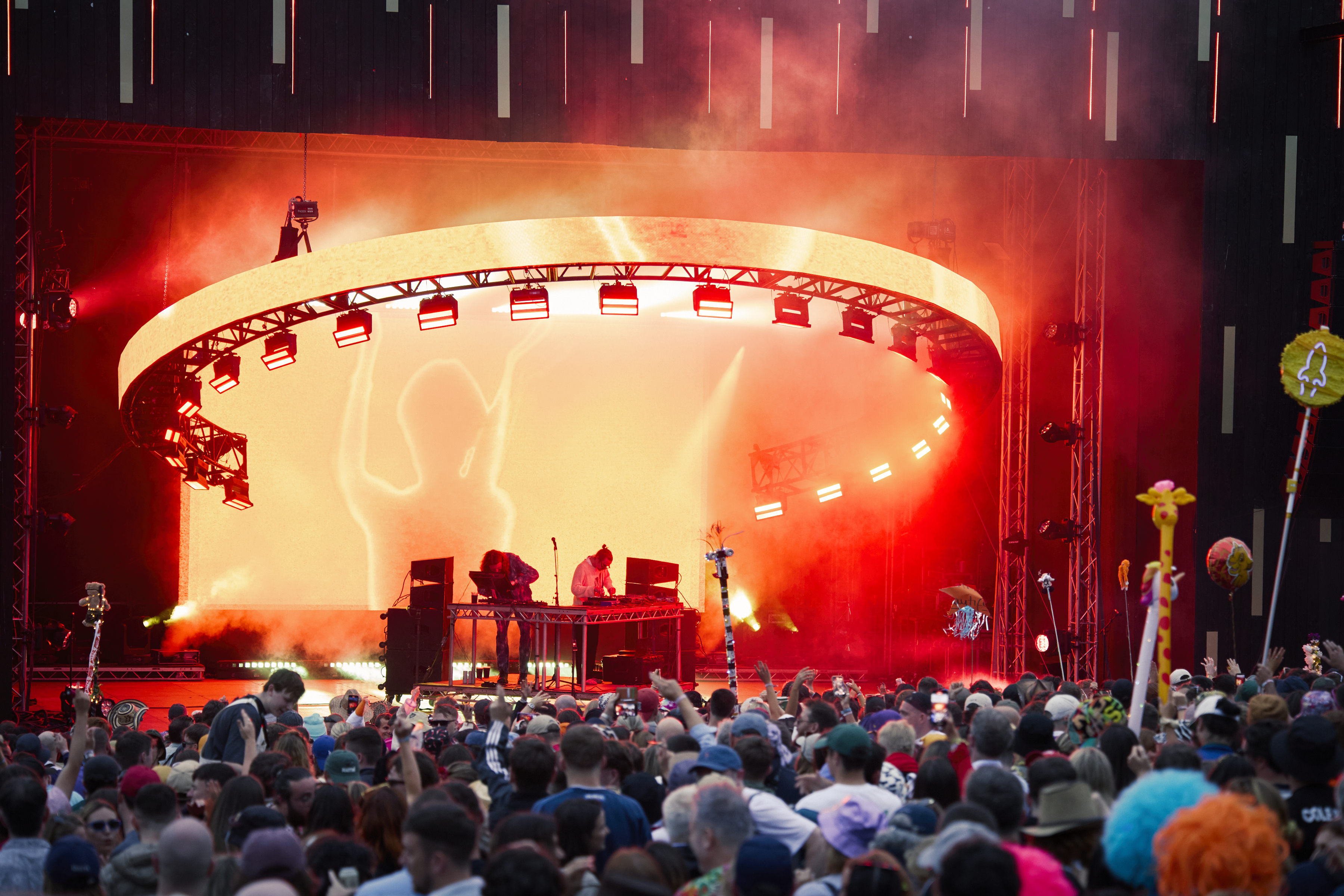
Lovely Days Stage
Commissioned by Guinness for its first major live music venture in 15 years, The Lovely Days Stage at All Together Now Festival has become a central gathering space for thousands of festivalgoers. Kev served as Creative Lead, bringing Jordan Ralph on board to collaborate on shaping the physical design, and then with Darragh McAuliffe and Pauric Freeman on lighting and visual elements. Now entering its third year in 2025, the stage is clad in Shou Sugi Ban timber and LEDs, with a distinctive arc of LED screens extending above the performers. This dynamic structure links artists and audiences under one immersive canopy, hosting globally recognized musicians in a continually evolving live setting.








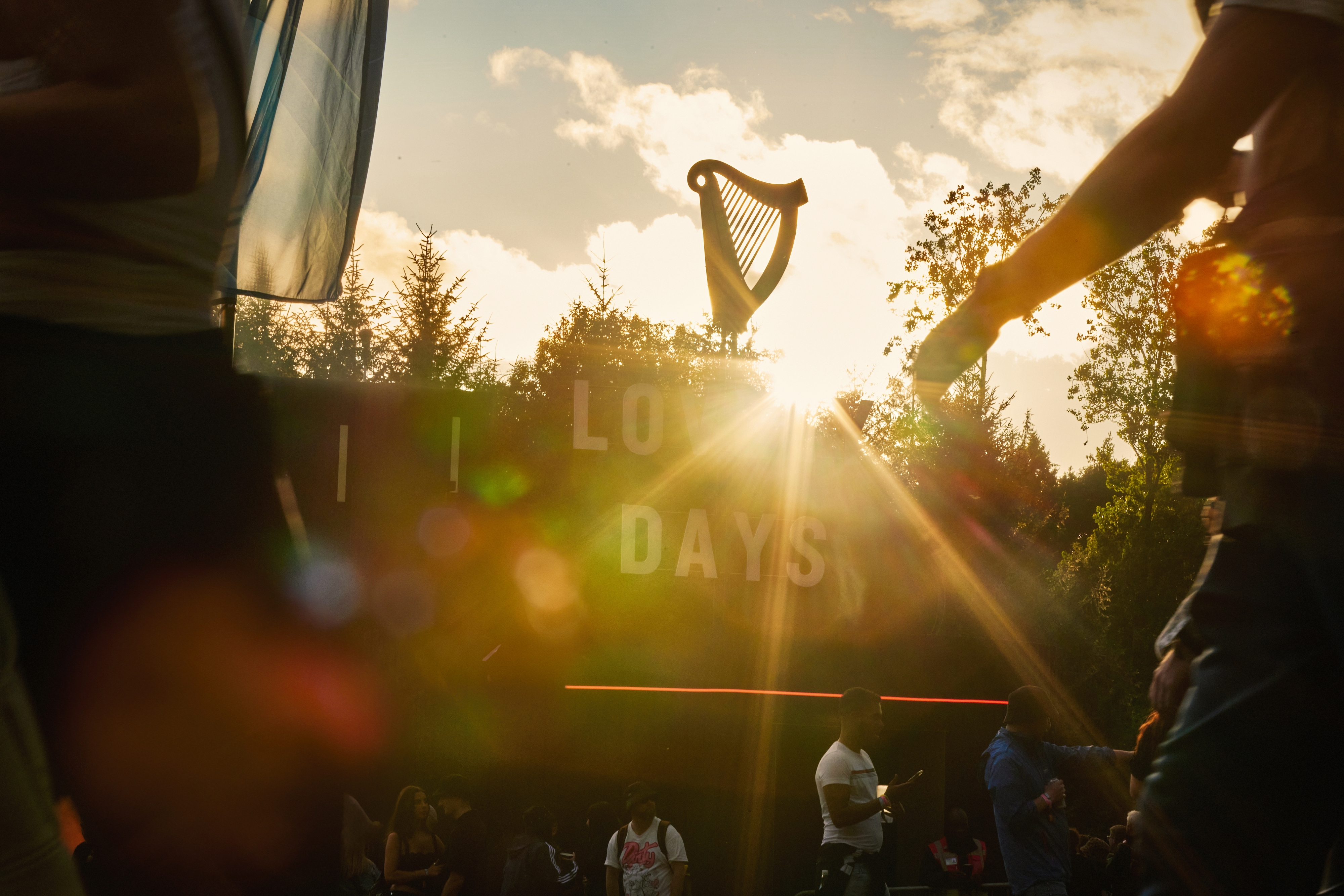
Client: Guinness
Project: Lovely Days Stage for All Together Now Festival
Project Director: Kevin Freeney
Design: Jordan Ralph Design & Kev Freeney
Consultant: The Tenth Man
Production: Verve
LX collaborators: Pauric Freeman & Darragh McCauliffe
Lighting supplier: Session Hire
Fabrication: Extreme Structures
15. 2024: the same stage, kept fresh
For 2024 the stage was rebuilt to the 2023 design from storage. The structure stayed the same; the organisers wanted a green room and side-of-stage area for artists, and Kev came back as visual orchestrator and the link between the artists and the lighting. The lighting was slimmed down, and new cloud footage was shot for the screens.
 Lighting plot 2024: Darragh McAuliffe, with Kev Freeney as art director.
16. 2025: a new screen layout
By 2025 the stage carried three LED screens, a centre screen and two taller side screens, with day and night versions of the content made for each. A TouchDesigner show file and an MVR of the 2025 stage were prepared in late July, and the mapping was still being tuned on the Thursday of the festival.
 Front elevation 2025: Mark Hanna, Session Hire.
What was learned, and carried forward
Design the working stage first: room for full backline and rolling risers, monitors and fast changeovers. Everything visual is built on top of that.
Let the brand sit in the materials. Charred timber and gold seams carried Guinness without heavy logos.
Design to the truss, not the wish list. Cutting the rig a month out kept the lighting inside what the structure could carry, and the stage looked better for it.
Real-time looks switched by day, evening and night gave a changing stage across a long weekend without new content for every act.
Keeping the same structure for three years turned rebuilding into refining: each year the lighting and the visuals got better instead of starting again.
Credits
Creative lead, art direction, visual design and live operation: Kev Freeney
Physical stage design: Jordan Ralph Design, with Kev Freeney
Lighting design: Darragh McAuliffe (Fade Time)
Visual system, TouchDesigner: Pauric Freeman
Consultant: The Tenth Man
Production: Verve
Fabrication: Extreme Structures
Lighting supplier 2025: Session Hire (front elevation drawn by Mark Hanna)
Photography: Anamaria Meiu (2023), Evan Doherty
Client: Guinness